
 Language


Is it not recommended to use cork flooring because it is too soft?
The "softness" of cork flooring is not that it is not solid. On the contrary, due to the advancement of modern processing technology, cork flooring not only has a solid appearance, but also brings a sense of comfort to people's feet. Next, let me introduce you to this' floor '.
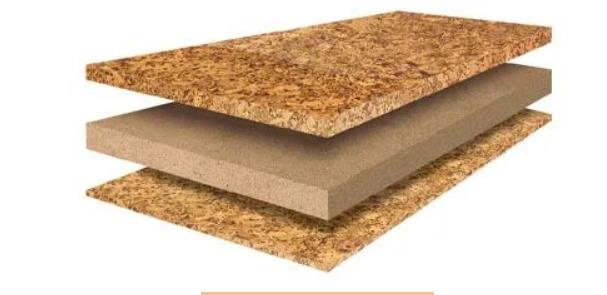
1: Advantages of Cork Flooring:
1. Soft and resilient:Cork flooring has a very soft texture, providing comfort and a good foot feel. Under the observation of a microscope, the structure of cork is honeycomb shaped, and each cork cell is a closed airbag. When subjected to external pressure, the cell shrinks and the internal pressure increases. When the pressure is lost, the air pressure inside the cell will restore the cell to its original state. Red wine is very popular among everyone, and the waterproof performance of the cork used to package red wine bottles. In addition, the cork stopper will be squeezed in the bottle and can still be restored to its original state when taken out, which shows the toughness of cork. So, cork flooring has a soft texture and very strong toughness.
2. Waterproof and non moldy:The same example of choosing cork for red wine bottle stoppers also shows that we don't have to worry about cork flooring being damp or moldy. Soaking oak bark in water for a long time will not rot, and the cork flooring produced from it has natural waterproof and moisture-proof properties.
3. Environmental Protection:Cork is derived from the bark of oak trees, without books, and oak bark is a renewable resource that can be reused. The adhesive used for making flooring from cork meets the national high environmental standards for formaldehyde content and is truly environmentally friendly and recyclable.
2: Disadvantages of Cork Flooring:
1. Poor wear and compression resistance:If outdoor sand particles are accidentally brought into the house, it will cause wear and tear on the floor; If the heel of a pointed shoe is used to step on a cork floor, the resulting indentation may not be recoverable. So it is necessary to wax and maintain the cork flooring periodically.
2. Difficult to maintain and upkeep:The surface is prone to dust. The surface of cork flooring is very prone to dust, so it needs to be cleaned regularly. Moreover, even a small grain of sand can cause wear and tear on the floor. For friends who don't have much time to spend on floor maintenance, it is still not recommended to use it.
3. Expensive price:Due to the limited resources of cork flooring, the annual production of cork flooring is less than 20 million square meters. To meet the demand, cork flooring is in a state of supply shortage, resulting in a relatively high price. Therefore, it is known as the "golden tower consumption of flooring", and the softer the texture of the flooring, the more expensive it is. So consumers who want to use cork flooring should have a sufficient budget in terms of funds.
4. Strong noise absorption:The noise resistance of cork flooring is also very good, because cork itself is a polyhedral honeycomb structure, with 50% of it being air. The enclosed space inside the honeycomb can absorb noise well, which makes cork flooring have a good compressive and noise reducing effect.
5. Good anti slip performance:Cork flooring has good anti slip properties, and its anti slip characteristics are also a major feature compared to other flooring. The anti slip coefficient of cork flooring is 6, which makes it difficult for the elderly to slip on when walking on it, increasing its usability.
The above are the advantages and disadvantages of cork flooring compiled by the editor, which can be used as a reference for everyone.